If you give the people in the local community a means to create change, which is often modest amounts of money and education, you can see miracles. You can see a change that will last because they change people fundamentally. Girls become aware of their rights and their possibilities, once ignored.
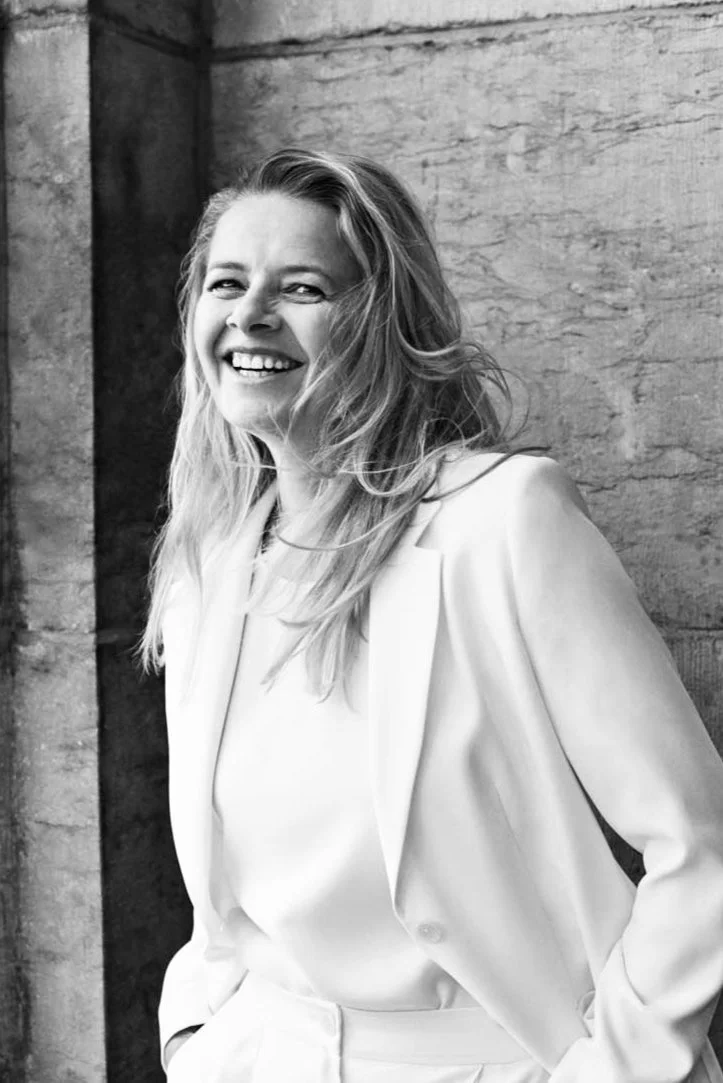
Mabel van Oranje
A serial entrepreneur for social change working to advance equality, justice and freedom. During the last decade, she played a catalytic role in the creation and growth of Girls Not Brides: The Global Partnership to End Child Marriage (2011), the Girls First Fund (2018) and VOW for Girls (2018). Princess Mabel is currently a board member of Fondation Chanel, the Lego Foundation, the Sigrid Rausing Trust and chair of VOW for Girls. She is also an advisor to Apolitical Academy Global, Co-Impact’s Gender Fund, Global Witness, and The Elders.
Source: https://www.royal-house.nl/members-royal-house/royal-family/princess-mabel.
Q & A
Basic Questions:
1. What’s your name?
My name is Mabel van Oranje.
2. Where are you from and where are you currently?
I’m from the Netherlands and I’m currently in London.
3. Can you describe who you are and what you do in your own words?
So, I don't think there's an easy word to describe what I do. Firstly, I am a human rights activist. I'm somebody who's trying to work for a world, which is more equal, more just, and more fair. The way I do it is that whenever I see things that I think that are wrong — morally wrong, ethically wrong, or that seem unjust to me — I help to create coalitions for change. I very much believe that everybody can make a difference, but nobody can do it alone. So, I try to help find the magical mix between activism, effective strategies and objectives as well as the donor money that are necessary to make big change happen. So, I've worked on issues like natural resource transparency and criminal justice. I've worked on issues like that to make sure there's education for everybody in the world. But most importantly, I've spent more than the last decade working primarily on trying to end child marriage. At least 12 million girls get married every year before the age of 18 and this issue was pretty much invisible and ignored. Once I found out about it, I couldn't sit still — I had to do something — and that's what I did.
Specific Questions:
1. When did you become interested in human rights? Did your study of economics and political science at the University of Amsterdam fuel this passion?
Partially, but I think it started earlier than that. In the Netherlands, I grew up in a middle-class family and my father would often travel to Latin America for work and he would come back with stories of the poverty he saw there. At a young age, this made me realise that I took a lot of things for granted such as going to school, having access to hospitals, and having a functioning police system. These things are not “normal” everywhere in the world and I became aware that where you're born has a huge impact on the opportunities that life gives you. By its nature, this seemed incredibly unjust and made me determined to change that. So, when I was young, I wanted to become a missionary. I was fairly religious at that time, now, I've become more agnostic. But if I look at what I do nowadays, I sometimes think it's a bit like being a modern 21st-century missionary in the pursuit of trying to make a better world where everybody has equal opportunities.
2. In 2015, you signed an open letter led by the ONE campaign, urging Angela Merkel (Former Chancellor of Germany) and Nkosazana Dlamini-Zuma (Minister of Cooperative Governance and Traditional Affairs of South Africa) to focus on women. Why is female representation and focus important?
Well, what is very scary is that pretty much all over the world, women are not equal to men, and in some places, the inequality is much worse. Even in the Netherlands where I grew up, women and men are not entirely equal and, you would consider the Netherlands as a pretty developed, progressive country. So, I personally felt how big this problem is and how it affects millions if not, billions of women around the world. Sadly, this is the case in the 21st-century, but it's also the reality. The reality is that women are often underrepresented in political functions and in a lot of companies, they get paid less for similar work done. On top of that, pregnancy and having children often set the careers of women back. So, I increasingly became aware of what Nicholas Kristof pointed out in the book ‘Half the Sky’. If you leave half of the world’s population behind, you shouldn’t be surprised when you can't optimise human well-being and welfare. So, I think not only is it morally incorrect to treat women differently than men but also economically stupid to do so and I wanted to help overcome the problem.
3. You founded Girls Not Brides: The Global Partnership to End Child Marriage, citing gender inequality as one of child marriage’s main causes. Why is this issue important and how has the charity specifically helped?
Child marriage is an enormous problem. A girl is married somewhere in the world every three seconds, which adds up to 12 million per year. Due to COVID-19, it might even be more nowadays. When you look at why child marriage happens, you can notice how there are issues of tradition and generational practices. There are also fears about sex and that a girl might get pregnant before marriage. Then, of course, there are issues related to poverty, you know, the idea that if you marry your daughter off, you have one less mouth to feed. But in the end, what it all comes down to is gender inequality. It's that view that if you have a son and a daughter, the boy should go to school and the girl shouldn't. If a boy makes a girl pregnant, he's a hero. If the girl gets pregnant, she's not only labelled promiscuous and shameful, but she also has to leave school and become a housewife. So, sexism and gender inequality are clearly evident. The domino effect this then has is enormous. Girls who marry at a young age typically don’t finish school and we know that every additional year of schooling increases the earning power of girls later throughout their life. We also know that when women earn an income, they spend it primarily on their families, their husbands, and their children. So, economically, it makes sense to keep girls in school and not marry them off too early. But also from a health perspective, girls who marry early tend to get their first children at an earlier age, when their bodies are physically not ready. This increases the risk of complications or even death during childbirth. Victims of child marriage are also increasingly at a higher risk of physical or sexual abuse by their husbands. So, it's a bad thing, not just for the girls but for society as a whole. So, what shocked me is that the world was basically ignoring this issue and there were very few programmes tackling this. In 2010, I learned about all this and I figured this needs to change. On a personal level, every girl should be able to choose her own love and her own future but also because economically, we all benefit when girls go to school rather than stay at home from a young age.
4. Who is your biggest role model?
Oh, that's hard, because I've been lucky to work with a lot of impressive people. Some of them, you know, have big names, like, I've worked with George Soros on his philanthropic work for a long time. One of the things he told me is to not be afraid of mistakes. You know, there is no success without failure. Many people don’t tell you about the cases when things didn’t go as predicted. In my case, I love the process of making mistakes and learning how I can adjust to become more impactful. And George encourages that honesty with me which I think is a privilege. I've also had the luck of working with ‘The Elders’ who, of course, are an amazing group of people. Archbishop Tutu, who was the chair of ‘The Elders’, really lived every second of his life for the things he stood for. His compassion for every human being, regardless of their professional importance, was so big. He would send everybody in ‘The Elders’ staff team a message on their birthday. Even if that person was an intern or a more junior partner member, it didn’t matter. He would get upset with me as the CEO if I had forgotten to tell him if somebody was getting married because he wanted to congratulate them. I think that sense of human compassion is so special. Besides that, I've also been truly inspired by some of the girls who I've met and who are under very dire circumstances, trying to stand up for their rights to live their best possible lives. Even though they have so little, they give a lot to the people around them. I've truly learned so much from them. So, yes, I have a lot of role models. I would encourage everybody who reads this to also try and find in your life, not just role models, but to also surround yourself with good mentors. I mean, most people are actually a bit flattered when you go to them with a question. So, I don’t think there's any harm in going to people to ask for a piece of advice. You know, I have a whole group of mentors around me, many of them informal, but people I can go to and ask them: am I still doing what I want to do in my life and prioritising the right things?
5. Where do you see yourself in 10 years?
Well, I would love to be retired in 10 years. But for me, retirement means that we have a world that is equal, fair, and just, with opportunities for all. Unfortunately, in 10 years, we will have hopefully made some progress towards that ideal world, but ultimately, we might not be there yet. So, I suspect that I will still be working on causes that I consider important, causes that deserve more attention, and causes where we need to build coalitions to make big change happen. Hopefully, I can make a tiny contribution. You know, Archbishop Tutu had this beautiful phrase, he said, “Look, if you want big change to happen, you need a big wave of change. Never forget that a big wave is composed of millions of drops of water, and you can be one.” So, I guess what I am hoping for is to find other drops of water, so that by working together, we can create a wave of change.
4. So, you champion equality, freedom and justice. These are all idealistic terms that many believe cannot be achieved. What do you think? Are these achievable aims?
So, when I started working on child marriage, people told me that I shouldn’t start because it’s impossible to achieve what I want to achieve. I do think that mindset is ineffective and kind of crazy because I have seen that the impossible is actually possible. You know, people thought gay marriage was something that would never become acceptable. Well, in many countries in the world, gay marriage is very much acceptable nowadays, although not in all countries yet. In the same way, child marriage, even though it is such a complex issue, should be tackled accordingly. If you can’t solve it one way, it just means you need to be more innovative.
For example, the top-down approach where people in Western capitals come up with big development programmes for developing countries is a common form of aid. However, if you want to change child marriage, you can't do it this way. You can't sit in London, Paris, or New York, and simply say “child marriage is bad” and believe that the people in Asia, Africa or Latin America shouldn't do it anymore. So, what you really need to do is empower the people who live in the communities, who see and know why child marriage happens every day. What we've seen noticed is that if you give the people in the local community a means to create change, which is often modest amounts of money and education, you can see miracles. You can see a change that will last because they change people fundamentally. Girls become aware of their rights and their possibilities, once ignored.
Community-led change is not a traditional form of development aid, but it’s a new method of support which we see effective results from. I find that people often don't like change or doing things differently. But if you find enough people who are open-minded and willing to try unfamiliar strategies, you will make mistakes, learn and understand the power of doing things slightly differently. Learning that some of your preconceptions were incorrect is possibly one of the most interesting parts of creating tangible change. You just have to be open to the fact that the world is often slightly different than you think.
5. Following on, can you recall a time when you’ve been proven wrong, had to adapt your past thinking or unlearn something? Personally, I’m currently reading Peter Singer’s ‘The Life You Can Save’ and it’s changing my perspective on poverty…
Yes, so as I’ve said, I often change my mind and or adjust my thinking. For example, one of the things I thought would be fairly easy is to get funds for grassroots organisations working locally to end child marriage. This has proven much more difficult than I thought. So, you know, we've been working on trying to figure out how can we mobilise money to go to grassroots organisations for a long time. Interestingly enough, a lot of traditional donors, whether these are government donors or private donors, due to certain rules or regulations are not willing or able to support local organisations in Africa, Asia and/or Latin America. So, what we've decided to do is set up an organisation called ‘VOW for girls’.
We're trying to mobilise the wedding industry around the idea that when people choose to love on their own terms, they use their wedding moment to also make a contribution to make sure that girls elsewhere in the world can independently choose love too. The organisation is also generating money to support people working locally in Africa, Asia, and Latin America to end child marriage. But I'd never thought we would have to develop this organisation.
Additionally, I also didn't realise how much sexuality plays a role in child marriage. Things to do with sex are taboo and there is a clear lack of comprehensive sex education everywhere, but especially in the Global South. I mean, I've met some girls who don’t know how you can avoid pregnancy or don’t even how you get pregnant. I’ve also met girls who have basic knowledge about sex but were refused contraceptives because they were minors. Then, there are these parents who marry their daughters young in fear of them having pre-marital sex which will dishonour the family.
I'm still trying to learn more about this and sex is a sensitive topic. But again, the fact that it's sensitive shouldn't mean that we shouldn’t look into it. If you don’t know what the reality is, you cannot develop good programmes. You also have to keep in mind different programmes are effective in different communities, and everything starts with understanding the local context and culture. So, I can't just walk into a rural town that practices child marriage and start telling people what to do. You have to empower the community members to create change themselves.