Unless you act things out, thoughts remain just thoughts. Those thoughts only have power when you put them into practice. We can't put them into practice, necessarily as individuals, but we can when we come together, that's where our power comes from.
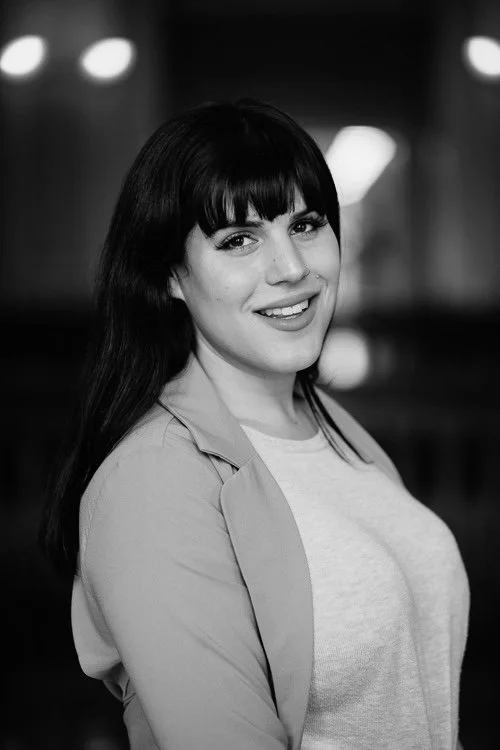
Esperanza Fonseca
A survivor of the commercial sex trade and a member of the transnational feminist organization AF3IRM.
You can find more about her work here.
https://www.worldwithoutexploitation.org/bios/esperanza-fonseca
You can read her open letter ‘A Socialist, Feminist, and Transgender Analysis of “Sex Work”’ here.
Q & A
Basic Questions:
1. What’s your name?
My name is Esperanza.
2. Where are you from and where are you currently?
Originally, I'm from Los Angeles, California, and I'm still here in California but I’ve done a lot of organising throughout different parts of the US.
3. Can you describe who you are and what you do in your own words?
I am, first and foremost, a labour organiser. So, I organise workers to fight for better working conditions and for them to have more power against their bosses. I'm also a member of the transnational anti-imperialist, feminist organisation ‘AF3IRM’. Our goal is to fight back against patriarchy, capitalism, imperialism, and fascism.
Specific Questions:
1. How and when did you become a revolutionary communist? Could you explain what that actually means and entails?
Absolutely. So, I didn’t fully understand what communism was before. Especially in the US, we are still living in a post cold war era where communism is villainised, demonised, and stigmatised. Even at college, when I was learning feminist philosophy, communism was painted as a white male’s authoritarian regime but that’s not necessarily true. I've been organising the labour movement, the feminist movement, the LGBT movement, and the immigrant rights movement for years now, and in order to achieve these goals, I think revolutionary socialism is necessary. All of these movements on their own are not enough to really transform society at its root. In the feminist movement, for example, achieving equality between men and women, under capitalism only means that we achieve an equal share of exploitation. So, we could eliminate the gender pay gap, but then women and men will just be exploited on the same level. I don't think that should be the goal. The goal should be to eliminate the exploitation of labour. So, what I realised is that looking towards communism essentially means fighting for a society where classes and class oppression don't exist. The goal has to be deeper than equality under capitalism, and we need to move beyond capitalism.
2. Do you think in order to be a feminist you have to be a communist and/ or vice versa? How did you become a proletarian feminist?
Well, you know, there are different kinds of feminism. A lot of people are liberal feminists, and they believe that we should achieve gender equality under capitalism. But the problem is I don't believe that's possible. For example, technically, we abolished slavery in the US, but slavery is still legal in prison. So, as long as capitalism continues, we won’t be able to fully abolish gender oppression or sexism. Technically speaking, can you be a feminist without being a socialist? Yes, you can. But if you are a feminist and not a socialist, then you're only a feminist for the minority of upper-class women. So, I'm a proletarian feminist because my feminism is not for the Hillary Clinton or the Nancy Pelosi, or the JK Rowling of the world. It's for the masses of women who are suffering under capitalism and suffering under imperialism, and those are the women that my feminism is focused on.
3. Did you have a job before prostitution if so what was it? What made you enter that industry?
Yeah, I actually had a job working as a union organiser, but when I started transitioning, because I'm transgender, I was fired. In general, transitioning is a very hard time in someone's life. It's very rocky. On top of that, there's a lot of discrimination that we face. Like many other transgender women, I lost my job when I started transitioning, and then I lost my housing because my roommates kicked me out. So, during this turbulent time, I had a friend who told me that I would make good money doing prostitution essentially. She also glamorised it, saying that if you're a pretty trans woman, you'll be able to make good money. So, it will help you feel good about yourself and make a lot of money. At this point, I was like, “Well, why not?” You know, I was already fired. I lost my housing. I was in a bad situation and I was also feeling bad about myself. So, I went into prostitution and reality hit me very hard after that.
4. You are a self-described survivor of the sex trade and on your Medium website, you have an open letter called ‘A Socialist, Feminist, and Transgender Analysis of “Sex Work”’ which has garnered a lot of attention. Can you tell me briefly what the purpose of that was? In your aforementioned letter, you talk about the glamorisation of prostitution and how modern terms like ‘sex work is real work’ is not the empowering phrase it may seem to be.
I’m happy that I get to talk to you about this because I feel that the youth are given messages that glamorise prostitution and the sex trade. In my opinion, that's the worst thing that could happen. What happens if there's a young girl or boy that really believes that, like I did, and then goes into prostitution? From that, they may experience rape, beating, harassment, and other types of trauma that they carry for the rest of their lives. On Snapchat, I’ll often see stories which glamourise being a sugar baby, having an OnlyFans, or being a prostitute. I think that’s so irresponsible, given the young audience on the app.
Focusing on your question more, after I left the sex trade, it took me a few years to get on my feet again. During this period, I was really frustrated with the way that the left in the United States was unable to critique the sex trade or offer any deeper messages than ‘sex work is work’. First of all, I don’t think sex work is like any other job because I have had so many friends die in the sex trade and it destroyed my life. I still have trauma from it and I am sick of hearing this narrative of it being like ‘any other job’. A lot of people on the left don’t speak against the sex trade because they think its means it will make them anti-sex work and regressive. I just think that's ridiculous. So, I wrote that letter to tie in my personal narrative story with a deeper Marxist analysis of the sex trade.
5. Can you explain the origins of prostitution and how misinformation about this can be detrimental concerning sex trade abolition?
Absolutely. So, we’re often told that when prostitution first existed, they were respected and almost worshipped — considered divine — but this could not be further from the truth. The first prostitutes were women and children who were enslaved, and the mark of a female slave was always sexual subjugation, right? So, slavery and prostitution often go hand-in-hand. When you look at how prostitution developed throughout history, it also mainly consists of women who come from the lowest classes of society, and that's not in a derogatory manner, right? It's just a fact. You know, the daughters of the bourgeoisie, were not selling themselves, and that's been the case, throughout history. It's always been a system that is very difficult to exit — often impossible to exit because with it comes a lot of (sexual) violence. When we ignore the origin of prostitution, we're essentially ignoring the reality of prostitution as it exists today. Also, the belief that prostitution was the first profession is false. That is a racist myth that was created by a man named Rudyard Kipling, who was an imperialist poet. He's the same man who justified genocide and imperialism in India. He is also the same man that would refer to Filipino children as “half devil and half-child”. You know, this man was extremely racist and he popularised the widespread notion that prostitution is the world's oldest profession. He used this myth to justify Western colonisation and control over India which involved prostitution. So, when people repeat that myth, without realising it, they're repeating the words of a racist imperialist who engineered that belief to specifically justify colonisation.
4. What was your dream as a child and what is your dream now? Has it changed?
When I was younger, I either wanted to be a doctor or some sort of religious clergy. The latter profession is interesting because I do have a degree in theology, but I would never go down a religious path now. My thoughts on religion have changed after studying it. Besides, I did not expect myself to be a union organiser.
5. Who is your biggest role model?
You know, there are so many, but one of my biggest role models is Jollene Levid. She is a union organiser and one of the founders of our organisation ‘AF3IRM’. Her family is from the Philippines, so she's organised with workers in the Philippines and the US. She has had this unbelievable commitment to organising women and organising workers for decades now.
6. Where do you see yourself in 10 years?
Honestly, doing the same thing I'm doing now, which is organising. I think I also want to go back to school and maybe study something a bit more technical than philosophy and theology. However, above all, I know that my political work is something I'm going to do for the rest of my life.
6. Without going into any detail you wouldn’t like to share, what was your day-to-day life like as a prostitute? How did you feel, where did you live, and did you maintain any contact with your family and friends?
It was honestly really difficult. The basic principle is that to make money to pay your rent and put food on the table, you need to give men sexual access to your body. That's really what it comes down to. Some days are better than others, but in general, it's a lot of dealing with men that you would otherwise find absolutely depressing. You also have to put up with that a lot of men who are predatory and pedophilic because these men are paying you for secrecy too. In addition to sexual access, they will tell you some of their most twisted fantasies. The men are often married or in a relationship, so they want to try things out on you basically.
More logistically, you post an ad, which you often have to pay for, and men would hit me up. I would attempt to screen them and try to figure out if the potential client was safe, but it's never a perfect process, right? Someone could have a clean record, and then, you know, one day, hurt you, rape you, or steal from you. This happens all the time. There is a lot of violence in it. Anyone who tells you there's not is blind. It’s a constant struggle because the client often wants more from you and you generally want to give less because you have to see multiple men a day and you don't want to have to do everything he wants, because it's literally physically going to hurt you. So, it's a constant power struggle, right? Men often get angry if you don't want to go all the way with them, and they feel like they're entitled to it because they paid you. So, it's a really dangerous situation. A lot of my friends just stopped talking to me when I went into the sex trade, which made me feel even more isolated.
7. How did your perspective on sex work, particularly prostitution, change before and after you became a prostitute? For example, did you have any prejudices or stigmas against sex work before entering the industry?
It’s funny because before I was in the sex industry, I thought it was a job like any other and I wanted to support people in the sex trade. Then, I entered the sex trade and realised that glamorised narrative of ‘sex work is real work’ is a lie.
8. How do rape culture, misogyny, racism and capitalism manifest themselves within the sex trade?
Yes, so, I think that the sex trade is the pinnacle of rape culture because it's based on this idea of male sexual entitlement, that a man should be able to access other people's bodies whenever and however, he wants it if he can afford to. That's literally what the sex trade is. Taking a group of people — women, queer men, children — who are in dire economic positions and turning them into a class of people that are available at any moment to be sexually assaulted by men of the higher classes. You know, the sex trade would not exist without capitalist exploitation. It existed before capitalism, but not before class exploitation, right? So, if you take away class oppression, the sex trade would not exist. People from oppressed nations are particularly pushed into prostitution because of imperialist military forces too. There were military brothels set up when the United States was in Vietnam and Korea.
9. How did you leave prostitution? Can you tell me more about “the right to exit” and what that is?
So, working in the sex trade felt like I was raping myself if that makes sense. I also did get assaulted, but doing the profession itself was on my own terms because I had to pay my rent. Nobody was physically grabbing me and making me do this. At the same time, it was the most degrading, horrible feeling ever. I wanted to get out of it sooner but I had no other way of paying my rent. At one point, I also thought my mom had cancer, so she was getting all these tests and medical treatments, and I had to help her pay for that. But eventually, I couldn't do it anymore and I ended up homeless. It took me a while to get back on my feet but I did and not everyone is as lucky as me. So, that's why I think that “the right to exit” is such an important thing. Ninotchka, the founder of our organisation ‘AF3IRM’ thinks it is the most denied right — the right to exit prostitution. We need to fight for a world where if anyone says they want to leave prostitution, they could do it without hesitation. We should also never have any other choice but to enter prostitution because, at that moment, a right is going to be violated.
10. How has prostitution affected you psychologically and emotionally in the long term? Do you receive any form of therapy at the moment?
Right now, I'm not in therapy but I definitely still have PTSD from working in the sex trade. In particular, there was an incident where I was sexually assaulted pretty badly. After that, I wasn’t able to do to work in the sex trade anymore. I still live with the trauma and flashbacks of that incident. And, you know, working in prostitution also made it really difficult for me to trust men and have a relationship with a man, which is something that I've been able to work on. My boyfriend and I have been together for like four years now, and the way that I trust him now is completely different to how I felt at beginning of the healing process.
11. Can you tell me what you do at AF3IRM? What are your goals? Why are activist organisations like yours important?
Yeah, so we organise women and girls around a feminist anti-imperialist programme. We're currently organising campaigns within the school districts, essentially, to protect girls from predatory exploiters in the industry. In a world where the sex trade exists, all women and girls are potential commodities to exploit for profit. At AF3IRM, we also fight against militarism which means fighting police brutality against women, and in particular against women in the sex trade.
Overall, I think that the most important thing for a genuine organisation is that you practice what you preach. You could have really good political thoughts and be super ineffective. Unless you act things out, thoughts remain just thoughts. Those thoughts only have power when you put them into practice. We can't put them into practice, necessarily as individuals, but we can when we come together, that's where our power comes from. So, that's why I implore everyone to join an activist or revolutionary organisation because we are fighting to give the next generation a better place to live in than we do.